


Everyone experiences wisdom tooth pain at least once in their lifetime. According to our discussions with the dentists at Daryaye Noor Clinic , wisdom tooth pain can be attributed to various factors. In the following article, the causes of different types of wisdom tooth pain are explained. Stay with us to learn more about home and clinical treatments for wisdom tooth pain.
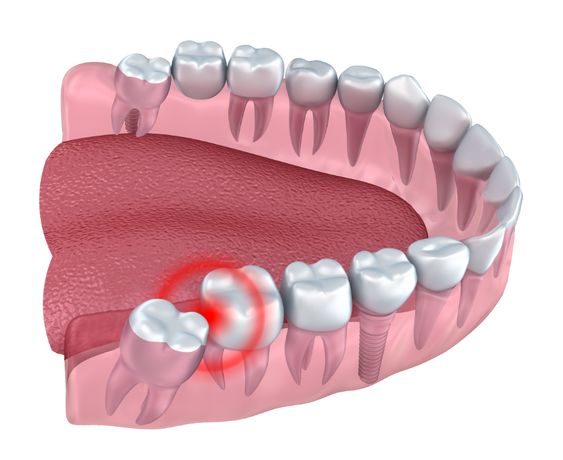
Stages of Wisdom Tooth Development
Wisdom teeth usually begin to develop in the late teenage years or early adulthood, between the ages of 16 and 25. However, the age of development may vary in some cases. Some people may even be born without wisdom teeth. The absence of wisdom teeth does not necessarily indicate a health problem; rather, it is part of the natural variations of the human body. An important point that should be evaluated from the beginning of wisdom tooth development is the way the tooth erupts. This is because the eruption pattern has a significant impact on the level of pain as well as the type of treatment required. If the tooth is impacted or located close to a nerve, the patient may experience more pain, and surgical extraction may be required. To evaluate the eruption pattern of a wisdom tooth, you should be examined by a dentist at a dental clinic.
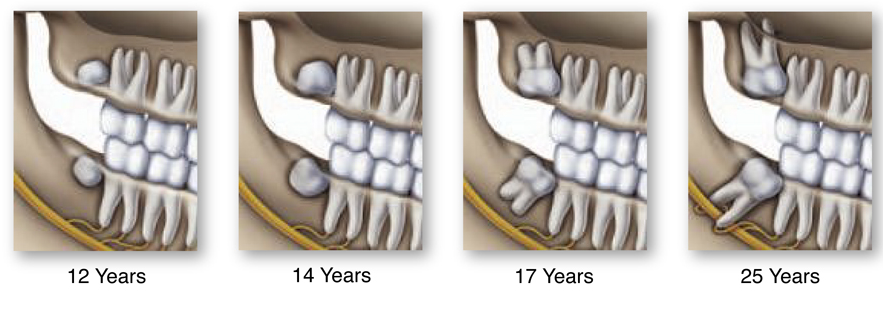
Stages of Wisdom Tooth Development
Development
Wisdom teeth begin to form and develop within the jawbone during the early teenage years.
Eruption
Over time, the wisdom tooth completes its development and eventually emerges through the gum by putting pressure on the surrounding tissue. Sometimes, due to insufficient space, the wisdom tooth cannot properly emerge through the gum tissue, which can cause pain.
Alignment
Because wisdom teeth are among the last teeth to develop, there may not be enough space for them to emerge properly. As a result, a wisdom tooth may grow horizontally, which is known as an impacted wisdom tooth. Alternatively, the wisdom tooth may emerge at an incorrect angle, causing it to become misaligned with the other teeth.
Types of Wisdom Tooth Pain
People commonly complain of wisdom tooth pain for various reasons. In general, the following are among the most common types of wisdom tooth pain:
Pain That Radiates to Other Areas of the Head and Neck
Wisdom tooth pain is not always limited to the area where the wisdom tooth is erupting. The pain may spread to other areas such as the head, neck, temples, throat, ears, and more. This is known as referred pain. These types of pain can appear in different ways. Sometimes, the pain may be intermittent or constant and may be caused by a wisdom tooth located close to a nerve , as there may not be enough space for it to emerge, causing pressure on surrounding tissues and nerves. These types of pain are usually more severe and may become worse when pressure is applied to the tooth. In such cases, the tooth may need to be surgically removed from within the gum.
Sometimes, this referred pain is normal and indicates that the wisdom tooth is emerging through the gum. In these cases, the pain is usually milder and is mostly limited to the area where the wisdom tooth is erupting, although it may sometimes spread to other areas of the head and neck. If the dentist determines that the tooth needs to be completely removed from the gum, an appropriate extraction procedure will be performed and pain medication may be prescribed to reduce discomfort.
Gum Pain
Some people complain of pain in the gum around their wisdom tooth. This pain can occur in several forms:
Many people experience a dull, persistent pain at the back of the gum. This pain may be caused by an erupting or impacted wisdom tooth, or it may occur when pressure is applied, such as during chewing. In this situation, the condition of the tooth should be evaluated. If there is not enough space for the tooth to develop, the dentist may recommend surgical removal or extraction.
Some patients describe their pain as a throbbing sensation in the gums surrounding the wisdom tooth. This may indicate inflammation or infection. In such cases, the dentist may prescribe antibiotics to control the infection before proceeding with tooth extraction.
Inflammation of the gum around a partially erupted or impacted wisdom tooth can cause swelling, redness, and localized warmth. These symptoms are often accompanied by gum pain and may indicate an infection.

Pain Caused by Tooth Decay or Nerve Involvement
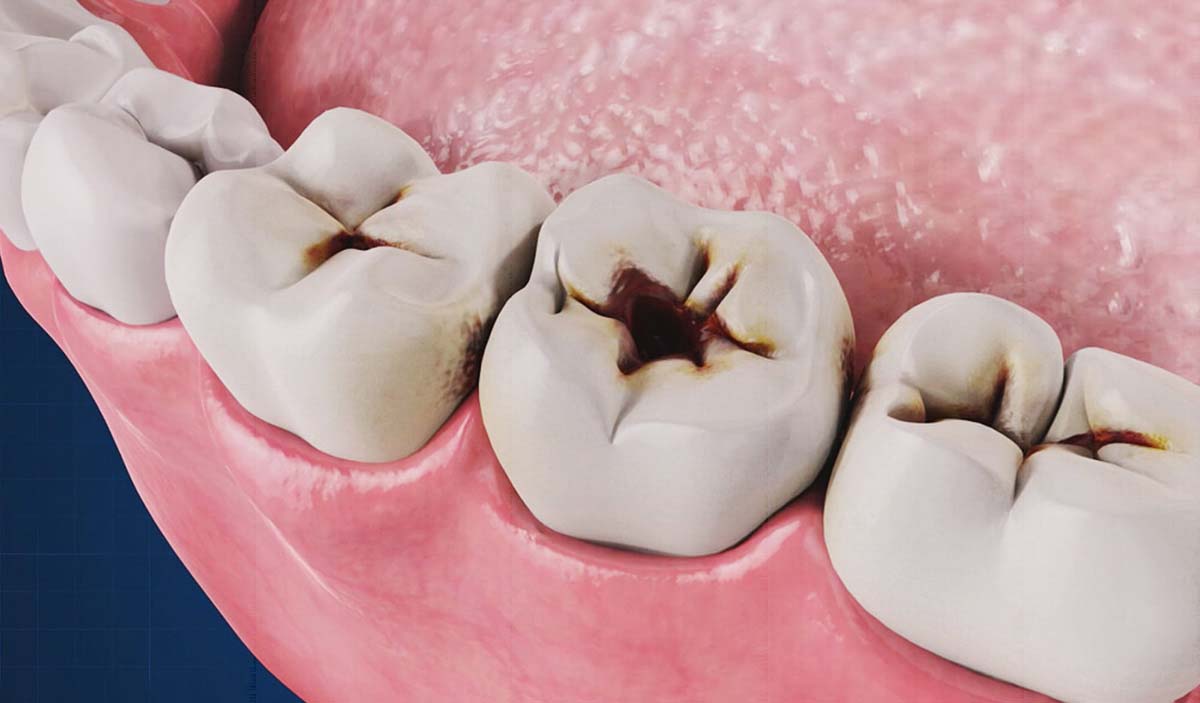
When a wisdom tooth has followed its normal development and has completely erupted from the gum, it may gradually develop tooth decay like other teeth and cause pain. To treat this type of pain, if the wisdom tooth has an opposing tooth and a functional chewing surface, it may be restored or undergo root canal treatment. If these conditions are not present, the tooth may need to be extracted.
Home Remedies for Wisdom Tooth Pain
In most cases, the most definitive and reliable way to treat wisdom tooth pain is to visit a dental center and receive professional clinical treatment. However, if you do not have access to a dentist and want to reduce your pain temporarily, you can try the following remedies:
Rinsing the Mouth with Salt Water
When the tooth or gum is infected, salt water can act as a natural disinfectant and help reduce pain.
Ice Compress
An ice compress can help reduce inflammation and relieve pain. Therefore, applying an ice compress can also be effective for temporarily reducing wisdom tooth pain.
Clove Oil
Clove oil can be used as a natural anesthetic. Apply one or two drops of the oil to a piece of cotton and place it over the tooth.
Using a Tea Bag
When the gum becomes inflamed or infected, placing a brewed and cooled tea bag over the affected area may provide temporary relief from tooth pain.
Clinical Treatment for Wisdom Tooth Pain
Many people have a fear of wisdom tooth surgery and therefore turn to home remedies. However, these remedies do not provide a permanent solution and only reduce pain for a short period of time. This may allow the condition of the tooth to worsen.
However, there is no need to worry about treating wisdom tooth pain at a dental clinic. Wisdom tooth extraction or surgery is usually determined by an oral and maxillofacial surgeon. If the tooth is close to a nerve, the surgeon may request a CBCT scan (a CBCT scan shows the position of the dental nerves). Both extraction and surgical removal are performed by an oral and maxillofacial surgeon, who has specialized skills and experience in these procedures.
To reduce patients' fear, our specialists use methods such as laser therapy . In this approach, the oral and maxillofacial surgeon can use low-level laser light before starting wisdom tooth surgery and administering the local anesthetic injection in the treatment area. This can help reduce pain and burning during the injection, while allowing dental anesthesia to take effect more quickly and effectively. Finally, after anesthesia has been achieved, applying low-level laser light can help reduce recovery time, the risk of infection, and bleeding without causing pain, burning, or adverse effects.
%20(1).jpg)
Final Thoughts
Sometimes wisdom tooth pain can become so severe that it prevents a person from carrying out their daily activities. It is best to visit a dentist for proper treatment of the pain. However, you can use home remedies for wisdom tooth pain to reduce discomfort until you are able to visit a dental center.


نظر خود را ثبت کنید