


Proper oral care during fixed orthodontic treatment is essential for protecting your teeth and gums, keeping your braces in good condition, and ensuring that treatment progresses as planned. Neglecting these precautions can lead to dental problems, damage to orthodontic appliances, and delays that may extend the overall treatment period.
What Are the Essential Care Tips During Fixed Braces Treatment?
Taking care of your teeth while wearing fixed braces involves several simple but important daily habits. These include maintaining good oral hygiene, using dental floss, following a suitable diet, and attending regular orthodontic appointments.
Maintain a Consistent Oral Hygiene Routine
Some patients experience dental and gum problems after their braces are removed. In many cases, these problems are associated with inadequate oral hygiene during orthodontic treatment.
Failing to brush regularly or clean your teeth after meals can cause plaque to accumulate around brackets and wires. Over time, this may lead to white spots on the enamel, tooth decay, and gum inflammation. More advanced gum problems may also develop if plaque buildup is left untreated.
Brush your teeth carefully at least twice a day, ideally after every meal, using an orthodontic toothbrush. Pay particular attention to the areas around brackets, along the gumline, and between your teeth.
Use Dental Floss Regularly
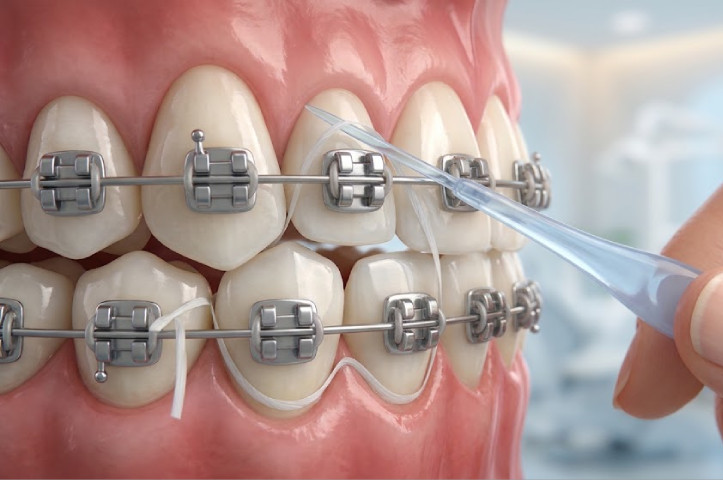
Even careful brushing cannot completely remove food particles and plaque from between your teeth. Dental floss is therefore an essential part of your oral hygiene routine during orthodontic treatment.
To clean between your teeth without damaging your braces, use orthodontic floss or a floss threader and follow these steps:
1. Cut a sufficient length of dental floss.
2. Carefully guide the floss between two teeth, passing it underneath the orthodontic wire if necessary.
3. Gently move the floss back and forth.
4. Curve the floss around each tooth in a C-shape and carefully clean just below the gumline.
5. Use a clean section of floss for each space between your teeth.
Note: Mild gum bleeding may occur when you first start flossing, particularly if your gums are inflamed. However, persistent or heavy bleeding should be evaluated by your dentist.
Use an Appropriate Mouthwash
A fluoride mouthwash can complement your daily oral hygiene routine by helping strengthen tooth enamel and reduce the risk of tooth decay.
Since fixed braces make it more difficult to clean certain areas of your teeth, your orthodontist may recommend a fluoride mouthwash to provide additional protection against cavities. Use it according to your dentists instructions.
Keep in mind that mouthwash does not replace brushing or flossing.
Follow a Braces-Friendly Diet
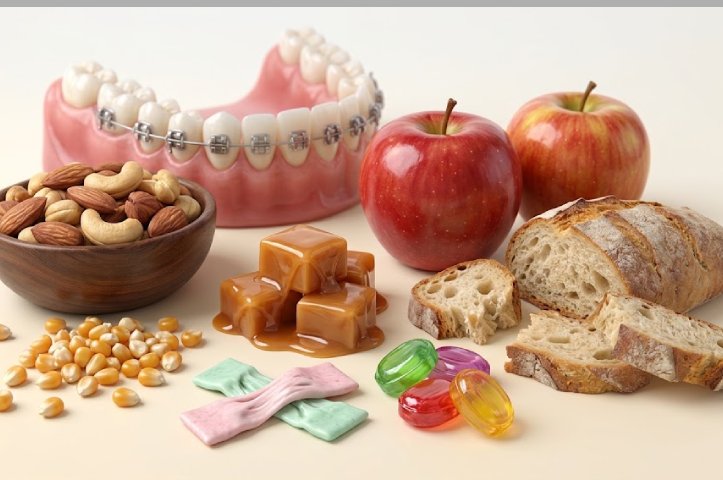
Your diet plays an important role in protecting your teeth and orthodontic appliances. Hard, sticky, and chewy foods can loosen brackets, bend wires, or damage other parts of your braces. Frequent consumption of sugary foods and drinks can also increase the risk of tooth decay.
During fixed braces treatment, try to avoid the following foods:
- Hard fruits and vegetables, particularly when bitten into whole. Cut them into small pieces instead.
- Nuts and hard seeds.
- Hard or crusty bread.
- Toffee and caramel.
- Popcorn, especially unpopped kernels.
- Hard candies and lollipops.
- Chewing gum.
Protect Your Mouth from Physical Injury
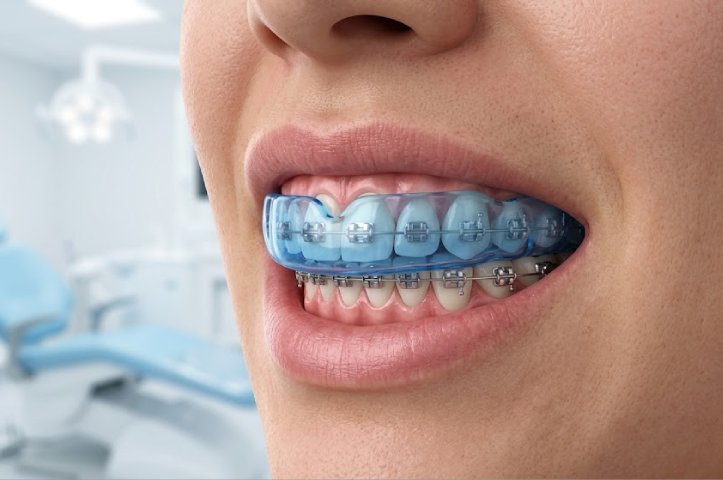
A direct impact to your mouth can damage your teeth, gums, brackets, or orthodontic wires. Take extra precautions when participating in sports or activities that involve physical contact.
If you play contact sports or practice martial arts, wear a properly fitted orthodontic mouthguard to help protect your teeth and braces from injury.
Attend Your Regular Orthodontic Appointments
Once fixed braces treatment begins, it is important to attend all scheduled orthodontic appointments.
During these visits, your orthodontist checks the position of your teeth, the condition of your brackets and wires, and the progress of your treatment. Adjustments can also be made when necessary.
Missing appointments or delaying scheduled adjustments may interfere with treatment progress and potentially extend the time needed to achieve the desired results.
To schedule an appointment for an orthodontic examination or follow-up, contact Daryaye Noor Dental Clinic using the phone number provided on this page.
How Can You Manage Pain During Fixed Braces Treatment?
Tooth soreness and pressure are common during the first few days after braces are fitted or adjusted. This discomfort usually decreases gradually as your teeth and surrounding tissues adapt to the orthodontic forces.
If the pain becomes uncomfortable, avoid trying to adjust or manipulate the brackets and wires yourself, as this may damage your orthodontic appliance or interfere with treatment.
Depending on your medical history and your dentists advice, over-the-counter pain relievers such as ibuprofen or acetaminophen (paracetamol) may help relieve discomfort. Rinsing your mouth with warm salt water may also provide temporary relief, particularly if your cheeks or gums are irritated.
If the pain is severe, continues to worsen, or does not improve after several days, contact your orthodontist.
When Should You Contact Your Orthodontist Immediately?
Certain problems during fixed braces treatment require prompt attention. Contact your orthodontist if you experience any of the following:
- Pain or pressure that continues to increase or does not improve after the first few days.
- Significant discomfort that interferes with eating or speaking.
- A loose or detached bracket.
- A broken or detached orthodontic wire.
- A bent or displaced wire that irritates your cheeks, tongue, or gums.
Ignoring these problems can interfere with the movement of your teeth, damage the surrounding soft tissues, and potentially delay your treatment.
If you need an urgent orthodontic appointment, contact Daryaye Noor Dental Clinic using the phone number provided on this page.
How Can You Prevent Mouth Sores During Fixed Braces Treatment?
Brackets and orthodontic wires can sometimes rub against the inside of your cheeks and lips, particularly during the first few days after braces are fitted or adjusted. This friction may cause irritation, small sores, or discomfort inside your mouth.
Orthodontic wax can help reduce friction by creating a protective barrier between the braces and the soft tissues of your mouth.
Your orthodontist may provide orthodontic wax when your braces are fitted. You can also purchase it separately from pharmacies.
How to Apply Orthodontic Wax
1. Wash your hands and make sure the area around the bracket or wire is reasonably clean.
2. Take a small piece of orthodontic wax, approximately the size of a pea.
3. Roll it between your fingers to form a small ball.
4. Gently press the wax over the bracket or wire that is irritating your mouth.
5. Smooth it into place so that it covers the part causing friction.
Note: Remove the wax before brushing your teeth. After cleaning your teeth, you can apply a fresh piece if the irritation continues. If a wire is broken or significantly displaced, contact your orthodontist rather than relying on wax alone.
Frequently Asked Questions
1. Is it normal to experience pain after getting fixed braces?
Yes. Mild tooth soreness and pressure are common during the first few days after braces are fitted or adjusted. This discomfort usually improves gradually. Over-the-counter pain relievers, if suitable for you, and warm saltwater rinses may help relieve symptoms.
2. When can I start brushing my teeth after getting fixed braces?
You can brush your teeth on the same day your braces are fitted. Use a soft-bristled toothbrush or an orthodontic toothbrush and carefully clean around the brackets and wires.
3. How can I protect my gums from irritation during orthodontic treatment?
If your brackets or wires rub against your gums, lips, or cheeks, orthodontic wax can help reduce friction and protect the affected area. If the irritation persists or a wire is causing an injury, contact your orthodontist.

Register your opinion